Introduction to Pickleball Court Dimensions
Whether you’re a competitive athlete or simply enjoying the sport recreationally, understanding pickleball court dimensions is essential to improving your performance. At My Pickle Drop, we believe that mastering the court layout gives players of all levels a real competitive edge. In this guide, we’ll dive into the key measurements and layout of a pickleball court, and explain how this knowledge can elevate your game, improve strategy, and make gameplay more efficient and enjoyable.
Why Knowing Pickleball Court Dimensions Matters
Knowing the exact dimensions of a pickleball court isn’t just a matter of technical trivia—it’s a strategic advantage. Proper positioning, footwork, shot placement, and overall gameplay rely heavily on a player’s spatial awareness. The more familiar you are with the court’s layout, the better you can anticipate your opponent’s moves, defend your area, and land effective shots. At My Pickle Drop, we always recommend new players take time to study the court layout before focusing on technique or paddle selection.
Standard Pickleball Court Dimensions
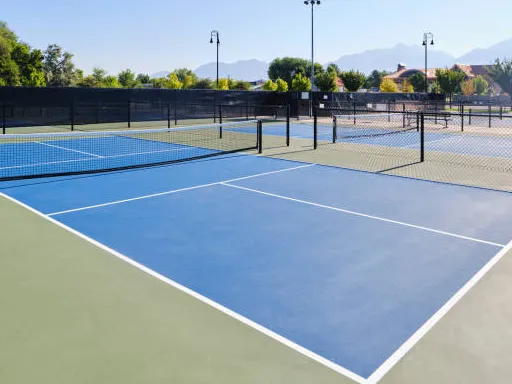
A standard pickleball court is a rectangle measuring 20 feet in width and 44 feet in length, including the lines. This size remains the same for both singles and doubles matches. The net is placed in the center of the court and stretches across the width at a height of 36 inches at the sidelines and 34 inches at the center.
Here’s a breakdown of the primary sections:
- Baseline: Located at the back of the court on both ends, the baseline marks the boundary where players serve.
- Sidelines: These run along the length of the court and define the width boundaries for both singles and doubles play.
- Non-volley zone (or Kitchen): This is a 7-foot area extending from both sides of the net. Players cannot volley the ball while standing in this zone, making it a unique and strategic area.
- Service courts: Each side of the court is divided into left and right service courts, each measuring 10 feet wide and 15 feet long.
This compact court size makes for a high-energy, quick-reaction game that keeps players moving constantly. It’s one of the main reasons pickleball is so accessible to people of all ages and fitness levels.
How Pickleball Court Dimensions Compare to Other Sports
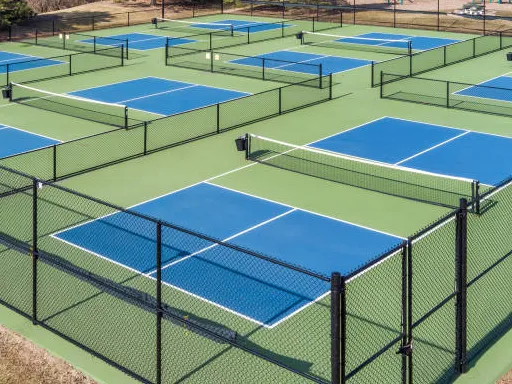
A pickleball court is significantly smaller than a tennis court, which measures 36 feet wide (for doubles) and 78 feet long. In comparison, a standard volleyball court is 30 feet wide and 60 feet long. Interestingly, a pickleball court shares the same dimensions as a doubles badminton court, making it feel familiar for those coming from that sport.
This smaller footprint encourages more controlled, strategic play rather than powerful shots from a distance. It also promotes player interaction, making the sport highly social and fun.
Understanding Court Dimensions in Actual Gameplay
The specific measurements of the pickleball court impact every phase of the game:
- Serving and Receiving: The division of the court into service areas ensures structured gameplay. Players must serve diagonally, landing the ball within the opposite service box. This setup forces accuracy and control from the server.
- The Kitchen Rule: The non-volley zone—or “kitchen”—creates a unique dynamic that doesn’t exist in tennis or badminton. Because players cannot hit volleys from this area, it limits aggressive net play and promotes finesse shots like dinks and drops.
- Shot Strategy and Placement: With just 20 feet of court width, players must be strategic about ball placement. Aiming for sidelines or corners can stretch your opponent out of position, especially in doubles matches.
- Defensive Movement: Since the court is compact, quick reflexes and sharp lateral movements are essential. Players who understand the exact spacing of zones can move more efficiently and anticipate the next play.
Tips from My Pickle Drop
At My Pickle Drop, we’ve seen firsthand how understanding court dimensions can transform a beginner into a smart, strategic player. Here are a few practical suggestions:
- Spend time walking and visualizing movements across each section of the court.
- Practice serves and returns using cones or markings to simulate real-game service box targets.
- Focus on learning how to control the ball near the kitchen line—this is often where points are won or lost.
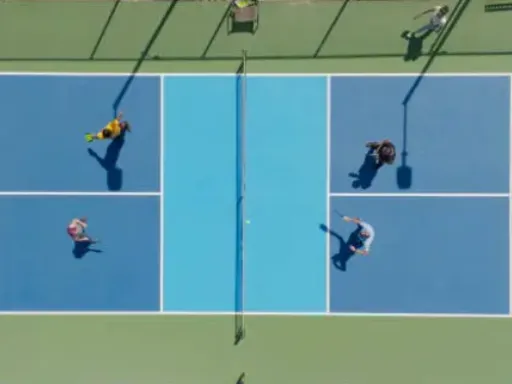
Breaking Down the Pickleball Court: A Complete Guide by My Pickle Drop
Understanding the layout and dimensions of a pickleball court is essential for players who want to improve their performance and develop advanced strategies. At My Pickle Drop, we believe that success on the court begins with knowledge. Here’s a detailed breakdown of each section of the pickleball court, including precise measurements and tactical insights.
The Service Zones
The service zones are critical to initiating each point. In pickleball, a serve must land within the diagonally opposite service zone to be considered legal. Each service zone is defined by the centerline, sideline, baseline, and the non-volley zone line.
These zones are 10 feet deep, stretching from the non-volley zone line (7 feet from the net) to the baseline (located 22 feet from the net). Because of their specific dimensions, service zones influence the angle, speed, and placement of the serve. A well-placed serve can immediately put the opponent on the defensive, limiting their ability to return effectively and setting the tone for the rally. Accuracy and consistency in this area are vital skills for both beginners and advanced players.
The Non-Volley Zone (Also Known as the Kitchen)
One of the most unique and strategically important areas on the pickleball court is the Non-Volley Zone, commonly referred to as the kitchen. This zone spans 7 feet on each side of the net and is marked by a solid line that runs parallel to the net. Within this zone, players are prohibited from volleying the ball—meaning, they cannot hit the ball in the air before it bounces.
Mastering your footwork and positioning around the non-volley zone is essential for executing controlled, finesse-based shots such as dinks. These soft, tactical plays are aimed just over the net, forcing opponents into difficult positions and preventing them from taking aggressive volleys. Awareness of where you are in relation to this zone helps avoid faults and opens opportunities for smart, well-placed returns.
The Baselines and Sidelines
The baselines run parallel to the net at the back of the court, while the sidelines run perpendicular to the net on either side. These lines form the outer boundaries of the playing surface. Any shot that lands outside these boundaries is considered out of play.
Understanding the exact positioning of these lines enhances your ability to make split-second decisions during play. For example, recognizing when a ball is likely to land out can help you avoid unnecessary returns, while keeping your shots within bounds demands precision and control. Practicing shots close to the sidelines and baselines improves your aim and strengthens your defensive game.
The Centerline and the Service Court Centerline
The centerline is the line that divides each side of the court into two service boxes, running perpendicular from the non-volley zone line to the baseline. It ensures each player serves from the correct area depending on the score and rotation.
The service court centerline plays a key role in dictating positioning, particularly during service. Staying aware of these dividing lines helps maintain proper formation during rallies and keeps players from committing positional faults. Mastering your stance and footwork along these lines contributes to better balance, consistency, and overall game awareness.
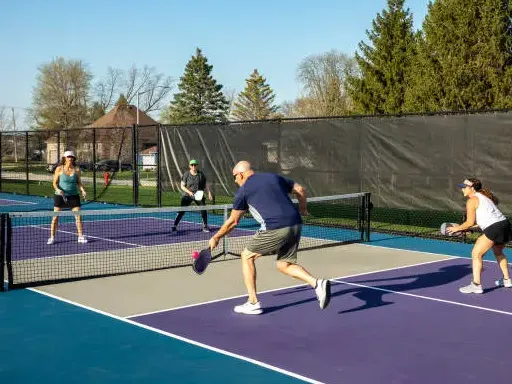
Detailed Measurements of Each Court Section
At My Pickle Drop, we don’t just believe in playing the game—we believe in understanding it from the ground up. Here are the exact measurements for every section of a standard pickleball court and why they matter.
Service Zones
Each service zone measures 10 feet deep by 15 feet wide, running from the non-volley zone line to the baseline. These zones are where every rally begins, and the ability to serve precisely within this space is crucial for gaining an early advantage.
Non-Volley Zone (Kitchen)
The kitchen extends 7 feet from the net on both sides and spans the full width of the court (20 feet). Players may step into this area only after the ball has bounced. Volleys are not allowed within this zone, making it a tactical hot spot for soft placement shots and defensive positioning.
Baselines and Sidelines
The full length of a pickleball court is 44 feet, with 22 feet on each side of the net, while the court width is 20 feet. The sidelines run along the entire length of the court, and the baselines mark the end of each side. These lines define in-bounds and out-of-bounds play, and mastering court awareness around them can help save critical points.
Centerline and Service Court Centerline
The centerline splits each service area vertically and runs 15 feet from the baseline to the non-volley zone line. It separates the left and right service areas and is crucial for correct service rotation and legal serve placement. Awareness of the centerline enhances your ability to position correctly during service and react efficiently during gameplay.
Understanding and Building Your Pickleball Court with My Pickle Drop
Whether you’re new to pickleball or ready to build your own court, understanding court markings and layout is essential for enhancing gameplay and ensuring an authentic experience. At My Pickle Drop, we’re dedicated to helping players master every aspect of the game—from court design to maintenance.
Decoding the Court Markings
Court markings are not just lines—they’re functional tools that guide player movement, define zones, and ensure fairness during play. Here’s a breakdown of what each type of marking means and why it matters.
Understanding the Purpose of Court Markings
Each line on a pickleball court has a strategic function. From defining service areas to designating the non-volley zone (commonly known as “the kitchen”), these lines help shape the dynamics of the game. They guide shot placement, assist with positioning, and keep matches organized and fair.
The Significance of Court Marking Colors
Many courts use different colors to distinguish zones. These colors visually separate areas such as the baseline, service boxes, and kitchen. For example, a contrasting color may be used to show where the non-volley zone begins and ends. Understanding these color codes helps players adapt quickly, especially on unfamiliar courts.
How Court Markings Influence Gameplay
Beyond visual guidance, court lines affect gameplay strategy. Skilled players use their knowledge of boundaries to plan smarter shots, avoid faults, and maximize court coverage. Being aware of your positioning in relation to these lines can provide a critical edge in both singles and doubles matches.
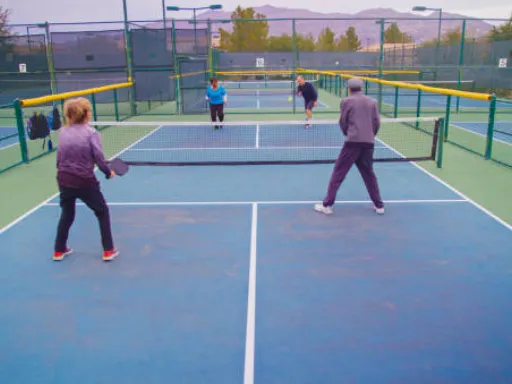
Building Your Own Pickleball Court with My Pickle Drop
If you’re ready to build your own court, My Pickle Drop is here to guide you through every step of the process—from planning the space to painting the final line.
Required Space for a Regulation Pickleball Court
A standard pickleball court measures 20 feet wide by 44 feet long. However, to ensure comfortable play and allow room for movement, especially during rallies, the recommended playing area is 34 feet wide by 64 feet long. This buffer zone accommodates ball chases and provides enough clearance for safe gameplay.
Step-by-Step Guide to Laying Out Court Dimensions
Step 1: Measure the Width
Start in the area where you plan to install your court. Measure a straight line 20 feet long—this will be one end of the court’s width. Use string, chalk, or tape to mark your endpoints.
Step 2: Establish a Right Angle
Using a large carpenter’s square or the 3-4-5 triangle method, form a right angle from one end of your 20-foot line. Measure out 44 feet in length to form the court’s side boundary and mark it.
Step 3: Complete the Rectangle
Repeat the right-angle process at the other corners, measuring 20 feet across and 44 feet down to complete the rectangle. Double-check all four corners are square and the measurements are accurate.
Step 4: Secure the Court Outline
Once all lines are confirmed, use court tape or line spray paint to outline the full court perimeter.
Step 5: Mark the Net Placement
From each baseline, measure 22 feet toward the opposite end to find the court’s center. Place a mark and set up net posts on both sides. These will serve as your net anchors.
Step 6: Create the Kitchen Line
From each sideline, measure 15 feet inward toward the net and draw a horizontal line across the court. This is your non-volley zone line, also known as the kitchen line.
Step 7: Add the Center Line
Measure 10 feet from each sideline toward the center of the court at both ends. Mark and draw a vertical line connecting the baseline to the kitchen line. This divides the service area into left and right sections.
Step 8: Final Review and Finish
Confirm that all measurements and markings are correct. Once complete, you’re ready to play on your very own pickleball court.
Common Mistakes to Avoid When Building a Pickleball Court
Incorrect Court Orientation
According to the USA Pickleball Association (USAPA), courts should be oriented north-to-south to minimize issues with sunlight glare and wind direction. Building in the wrong direction can cause unnecessary play disruptions.
Ignoring Noise Regulations
Before beginning construction, check with your local neighborhood association, community rules, or zoning guidelines. Pickleball paddles can be loud, and some areas have restrictions on recreational noise.
Court Maintenance Tips from My Pickle Drop
Maintaining your court properly is key to long-lasting use and safe gameplay. Here are a few essential maintenance practices:
- Check for Cracks and Uneven Surfaces: Regularly inspect your court for damage or irregularities that could lead to injuries or faulty gameplay.
- Keep It Clean: Sweep the court regularly to remove leaves, dust, and other debris. This prevents slips and ensures consistent ball bounce.
- Maintain Line Visibility: Repaint or retape court lines as needed. Faded markings can confuse players and lead to inaccurate calls.
- Seasonal Upkeep: Depending on your climate, be prepared to perform seasonal repairs. Cold weather, moisture, and heat can impact surface integrity.
By taking the time to maintain your court, you’ll extend its life and reduce the need for costly repairs.
Pickleball Net Height: The Key to a Perfect Court
When it comes to building or setting up your own pickleball court, one of the most critical yet often overlooked details is the height of the net. At My Pickle Drop, we know that achieving the proper net height is not just about following the rules—it’s about elevating the way you play the game.
In official pickleball standards, the net stands 36 inches high at the sidelines and dips slightly to 34 inches in the center. This small but significant difference in height isn’t just for aesthetics—it plays a strategic role in shaping gameplay. The central dip promotes exciting rallies, dynamic net play, and accessible performance for players across all skill levels. Whether you’re a beginner or a seasoned competitor, this net height helps create a balanced experience that challenges your skill while keeping the game fun and fast-paced.
One of the advantages of pickleball is the consistency in setup—the net height remains the same whether you’re playing singles or doubles. This standardization makes it easy to adapt from one court to another and ensures a level playing field for every match. Interestingly, the pickleball net is lower than a standard tennis net, contributing to the sport’s uniquely fast tempo and requiring quick reflexes, strategic ball placement, and creative shot selection.
Keeping your net at the correct height doesn’t just follow regulations—it enhances your competitive edge. It ensures consistent bounces, fair volleys, and more engaging rallies. Whether you’re setting up your court at home, at a club, or in a public park, always take a moment to check and verify the net height before starting your game. That attention to detail can make all the difference in how the match unfolds.
Mastering the Pickleball Court with Precision
Understanding the layout and dimensions of a pickleball court—especially the net height—can dramatically improve how you approach the game. Knowing exactly how the court is structured allows you to position yourself more effectively, anticipate your opponent’s moves, and execute shots with greater precision.
At My Pickle Drop, we emphasize not just playing the game, but mastering it through strategic understanding. Every dimension, from the net height to the kitchen zone, affects how the game is played. For instance, knowing that the net dips lower in the center can help you perfect drop shots or better defend against hard drives.
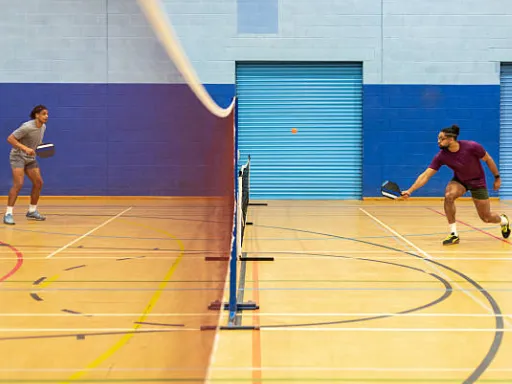
How Court Dimensions Can Improve Your Game
Learning the dimensions of a pickleball court is like learning the terrain in any competitive sport. It becomes a part of your strategic arsenal:
- Rally Management: Understanding spacing helps you control the pace of rallies and apply pressure at the right moments.
- Strategic Shot Selection: Knowing how far you are from the net or sidelines enables more accurate and effective shots.
- Positioning and Anticipation: Awareness of the court layout helps you move with purpose and predict your opponent’s next move.
Resources to Deepen Your Court Knowledge
To set up your court properly or enhance your knowledge of official layouts, refer to resources from USA Pickleball or check out official guides and diagrams endorsed by governing bodies. At My Pickle Drop, we also offer equipment and educational tools that support players in setting up compliant courts and improving their overall gameplay.
Practice Drills to Sharpen Court Awareness
Here are a few simple yet effective drills that focus on net height awareness and court positioning:
- Serve Placement Challenge: Work on placing your serves deep into the opponent’s court while staying within bounds.
- Non-Volley Zone Mastery: Improve your dinks and soft shots near the net to control the kitchen area.
- Sideline Accuracy Drill: Focus on sending the ball close to the sidelines, challenging your opponent’s range.
- Drop Shot Precision: Practice soft drop shots that just clear the 34-inch center of the net, catching your opponent off guard.
These drills help condition your reflexes and develop the spatial awareness needed to perform confidently during actual matches.
Final Thoughts from My Pickle Drop
Understanding and respecting the official pickleball net height is about more than just setting up a game—it’s about setting the tone for fairness, competition, and fun. Whether you’re a casual weekend player or aspiring tournament competitor, these small but crucial details can transform your performance.
At My Pickle Drop, we’re dedicated to helping you become the best version of your pickleball self. From top-quality equipment to expert tips, we’re here to guide your pickleball journey every step of the way.
So, gear up, fine-tune your court, and hit the ground swinging—because the path to pickleball perfection starts with precision.